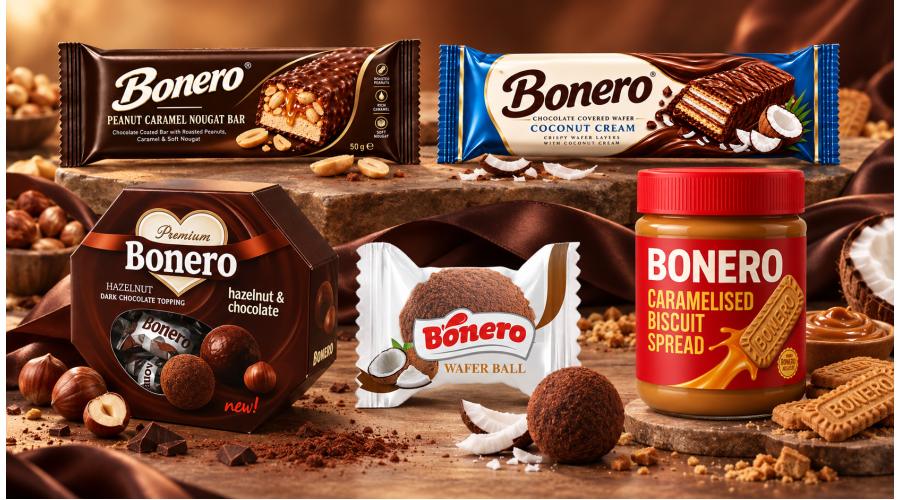
How to Build a Chocolate Spread Range for Supermarkets
How to Build a Chocolate Spread Range for Supermarkets
A chocolate spread range should not be built by selecting several similar jars and hoping that different labels will create enough choice. For supermarket buyers, importers and retail-category teams, the objective is to give shoppers clear reasons to choose different products while keeping the shelf understandable, commercially viable and manageable for the supply chain.
A well-structured range can serve several purchasing occasions: an accessible everyday spread, a family-oriented option, a more premium proposition, a differentiated flavour concept or a seasonal line. The correct mix depends on the market, retail format, target price architecture and the role that chocolate spread already plays in the supermarket’s assortment.
Begin with the Shopper, Not the Supplier List
The first step is to define the customer groups the supermarket intends to serve.
Some shoppers may be looking for an everyday household product; others may want a more distinctive flavour, a gift-oriented product or an item that feels more premium. These occasions should guide the range structure. Adding multiple products that target the same shopper at the same price level can make the shelf crowded without adding meaningful choice.
A practical starting point is to map the range around roles, rather than around individual flavours:
- An accessible entry product
- A regular household option
- A differentiated or premium reference
- A limited seasonal or promotional product, where relevant
- A complementary product for specialty or gourmet placement, where relevant
Not every supermarket needs all of these roles. A smaller format may need a focused range, while a larger supermarket may have room for clearer segmentation. The important point is that each SKU should have a reason to exist.
Build a Clear Price Architecture
Price architecture is one of the most important decisions in supermarket range planning. It helps the shopper understand the difference between products and helps the retailer avoid unnecessary overlap.
The buyer should define the intended consumer-price tiers before approving products. For example, an entry-level product may be selected to support accessibility, while another product may justify a higher price through brand positioning, presentation or a more distinctive category role.
The final retail price should be assessed alongside freight, import costs, distribution margin, retailer margin, promotional funding and the expected rate of sale. A product that appears attractive at purchase price may not fit the final shelf-price target once all costs are included.
Useful questions include:
- Does each price tier serve a distinct shopper or occasion?
- Are two products likely to compete directly for the same purchase?
- Is there a clear reason for a shopper to trade up?
- Does the shelf offer a sensible entry point without weakening the overall category?
- Can the retailer support promotional activity without damaging the long-term price structure?
A good range allows the shopper to move between price levels with a clear understanding of what changes and why.
Use Pack Format to Create Meaningful Choice
Pack format affects more than shelf space. It shapes consumer perception, price accessibility, household use, warehouse handling and replenishment planning.
A smaller format may support trial, convenience or a lower entry price. A larger format may be considered for household use, value positioning or a channel where shoppers buy less frequently but in larger quantities. The right format should follow the intended retail role, not simply copy a competitor’s pack.
Before adding a product to the range, the buyer should consider:
- Shelf width and vertical placement
- Consumer price perception
- The relationship between net quantity and intended use
- Product visibility and label clarity
- Retailer replenishment needs
- Carton handling and storage
- The impact on freight and local distribution
Current packaging, carton and logistics information should be requested from Aprichem for each product enquiry before range decisions are finalised.
Differentiate Through Category Roles, Not Keyword-Like Claims
Supermarkets do not need several products that all communicate the same message. Instead, the buyer should decide how each product will differ in a way that customers can understand.
A range may use distinct roles such as mainstream, family, premium, specialty or seasonal. The difference can be communicated through shelf placement, pack presentation, brand identity and retail-price positioning. It should not rely on unverified product claims.
A premium reference, for example, should have a clear reason for being separate from the mainstream line. A seasonal SKU should support a defined campaign rather than remain on shelf without a purpose. A differentiated flavour should complement the established range rather than duplicate it.
This approach makes planograms easier to manage and makes the assortment more understandable for store teams and shoppers.
Plan the Range as an Import and Supply-Chain Project
Range building is also an operational decision. Each additional SKU adds potential complexity to ordering, forecasting, warehousing, label approval and store replenishment.
Before finalising the range, importers and supermarket teams should review:
- Expected demand by SKU
- Launch timing and promotional calendar
- Required label languages
- Product and allergen documentation
- Destination-market requirements
- Storage and handling considerations
- Order quantities and replenishment expectations
- Port, delivery term and shipment planning
For private-label projects, the buyer should provide brand artwork, barcode information, packaging direction, destination-market details and planned volumes at an early stage. Printed packaging and finished-product production can have different requirements, so the full project should be assessed before an offer is approved.
Test Before Expanding
A supermarket range does not have to begin at full scale. In some cases, a focused initial assortment provides better learning than launching several overlapping SKUs at once.
The first launch can help a buyer understand which price tier, product role or presentation attracts the strongest response in the intended channel. This information can guide later decisions on range extension, promotion and category placement.
The objective is not to add more products for the sake of assortment size. It is to build a range in which every SKU has a defined commercial purpose.