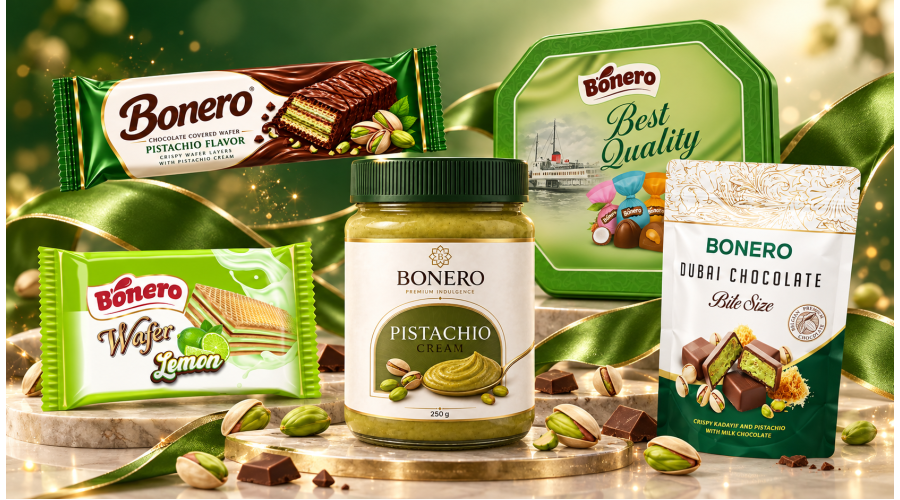
Pistachio Spread for Retail Sourcing
Pistachio Spread for Retail Sourcing: A Buyer’s Guide
Pistachio spread can give a confectionery or sweet-spread assortment a distinct role beside familiar chocolate, hazelnut and other nut-based products. For an importer or retail buyer, however, the opportunity is not created simply by listing another flavour. The product needs a clear commercial role, a suitable retail position and a sourcing plan that reflects how it will actually be sold.
This guide is designed for buyers assessing pistachio spread wholesale opportunities for supermarkets, specialty stores, distributors and other retail channels. It does not assume a specific recipe, package, price, product availability or commercial arrangement. Those points should be confirmed against the current product information and project requirements.
Define the Category Role Before Requesting a Quote
The first decision is where pistachio spread belongs in the buyer’s range.
It may be considered as a premium sweet spread, a specialty-food item, a seasonal proposition, a gift-oriented product or an addition to a broader confectionery assortment. Each route creates a different commercial expectation.
A buyer adding pistachio spread beside established chocolate spreads may be seeking differentiation. A specialty retailer may be looking for a product that supports a more curated assortment. A distributor may need a line that helps its customers refresh an existing sweet-spread selection. These are different objectives, and they should not be sourced in the same way.
Before starting supplier discussions, clarify:
- The intended sales channel
- The expected consumer profile
- The planned shelf or catalogue position
- The target retail-price range
- Whether the product is for a year-round range, promotion or seasonal programme
- Whether it will be sold under an existing brand or considered for a private-label project
A clear category role makes later decisions—such as packaging, label design, quantity and launch timing—more practical.
Build the Decision from Retail Back to Sourcing
A wholesale offer should be evaluated from the retail shelf backwards, not only from the factory price forwards.
The buyer should first consider the intended consumer price and the product’s role in the assortment. Freight, import costs, local handling, distribution margin, retailer margin and promotional activity may all affect whether the finished retail position is viable.
This does not mean that every pistachio spread must compete on price. A differentiated product may be assessed on its ability to add variety, support a premium range or give customers a reason to explore a new category. But the buyer must be clear about the trade-off between price, positioning, expected sales pace and stock commitment.
Useful internal questions include:
- Is the product expected to attract trial, repeat purchase or seasonal demand?
- Will it sit beside mainstream spreads or in a specialty section?
- Is the target customer likely to compare it directly with lower-priced alternatives?
- Does the intended price position allow sufficient margin across the supply chain?
- Will the buyer need promotional support at launch?
These questions help avoid a common sourcing mistake: approving a product before its retail role is defined.
Review the Product Through Current Documentation
The name “pistachio spread” does not provide a complete commercial or technical specification. Buyers should not rely only on a product title, front label or image when evaluating an offer.
A proper review should include the current product specification, ingredient information, allergen statement, nutrition information, storage guidance and any other documents relevant to the destination market. Where samples are available and appropriate to the project, they can help the buyer assess whether the product matches the intended positioning.
The review should involve the right people inside the buying organisation. Commercial teams may focus on price and shelf role; quality teams may need product and label information; marketing teams may assess communication and packaging direction; logistics teams may need to understand handling and delivery requirements.
The objective is not to seek unnecessary complexity. It is to ensure the product that is quoted is the product the buyer intends to launch.
Treat Packaging as a Retail and Logistics Decision
Packaging is not only a presentation decision. It influences consumer perception, shelf use, warehouse handling, transport planning and the information that can be displayed on the label.
A buyer should determine whether the intended format needs to support an accessible entry price, a premium presentation, regular household use, gifting or a professional channel. The right answer depends on the market and buyer strategy, not on a universal pack preference.
Before final approval, buyers should request current information relevant to:
- Available packaging direction
- Labelling area and mandatory information
- Product protection and tamper-evidence arrangements
- Carton configuration
- Warehouse and retail handling
- Pallet and shipment planning, where applicable
Current packaging options and logistics data should always be confirmed with Aprichem for the specific enquiry.
Prepare Private-Label Projects Properly
For private label, the buyer should treat the project as a coordinated commercial process rather than a last-minute artwork exercise.
The supplier needs enough information to assess the project accurately. This may include the target country, required languages, brand identity, packaging direction, estimated quantity, launch timing, barcode requirements and documentation needs.
Buyers should also understand that product production and printed packaging can involve different commercial requirements. The final project structure may depend on the selected product, artwork, materials, language versions and order plan. Aprichem should confirm the applicable terms for each enquiry.
Send an RFQ That Produces a Useful Answer
A complete enquiry helps avoid generic quotations and unnecessary follow-up.
Include:
- Company name and destination country
- Target sales channel
- Intended retail position
- Brand or private-label preference
- Preferred packaging direction
- Estimated initial order and expected repeat demand
- Launch timing
- Required label languages and documents
- Destination port and preferred delivery terms
Discuss Your Pistachio Spread Sourcing Project with Aprichem
Aprichem Foods works with international buyers sourcing confectionery products from Turkey. For pistachio spread retail sourcing, share the commercial context behind the project—not only a request for price.
Aprichem can review the current options relevant to the enquiry and confirm applicable product information, packaging details, commercial terms and project requirements.